Spices are essential ingredients in cooking, adding flavor, aroma, and depth to dishes. They come in a wide variety of types, each with unique characteristics. Spices can be categorized as regular (conventional) or organic, with organic spices being grown without the use of synthetic pesticides or fertilizers.
Regular Spice Varieties:
Black Pepper: One of the most common spices, black pepper comes from dried peppercorns. It is used in both savory and sweet dishes for its pungency and heat.
Cumin: A staple in Indian, Middle Eastern, and Mexican cuisines, cumin has a warm, earthy flavor and is commonly used in curries, stews, and spice blends like garam masala.
Coriander: Coriander seeds have a citrusy, slightly sweet flavor and are widely used in spice blends and in cooking, particularly in Indian and Latin American cuisines.
Turmeric: Known for its vibrant yellow color, turmeric has a warm, slightly bitter flavor. It’s a key ingredient in curry powders and a staple in Indian cooking.
Ginger: Fresh or dried, ginger is known for its spicy, slightly sweet flavor. It’s used in both sweet and savory dishes, including gingerbread, stir-fries, and teas.
Cinnamon: A sweet, aromatic spice often used in both baking and savory dishes. It comes in two main varieties: Ceylon (true cinnamon) and Cassia (common cinnamon).
Chili Powder: A blend of dried ground chilies and spices, chili powder adds heat and depth to dishes. It’s a key ingredient in Tex-Mex and Indian cooking.
Cardamom: Known for its fragrant, sweet-spicy flavor, cardamom is used in both sweet and savory dishes, especially in Middle Eastern and Indian cuisines.
Cloves: With a strong, sweet, and slightly bitter flavor, cloves are used in spice blends, savory dishes, and desserts.
Mustard Seeds: Used for tempering in Indian cooking, mustard seeds have a sharp, pungent flavor when toasted and can be used whole or ground.
Organic Spice Varieties:
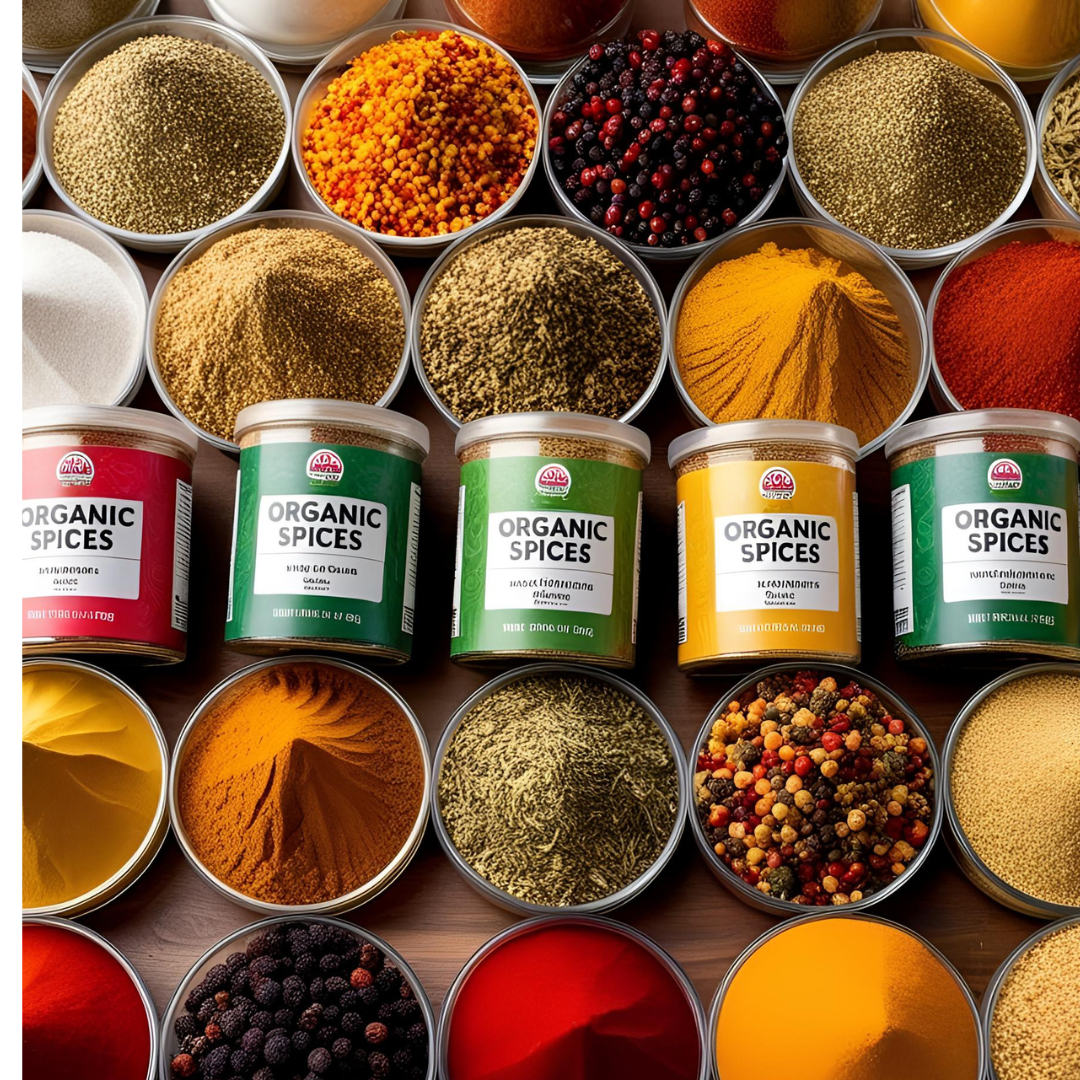
Organic spices are grown without the use of synthetic chemicals, pesticides, or genetically modified organisms (GMOs). Some popular organic varieties include:
Organic Black Pepper: Produced without synthetic pesticides, organic black pepper offers the same pungent flavor as conventional pepper but with a more eco-friendly cultivation method.
Organic Cumin: Grown using organic farming practices, organic cumin maintains its warm, earthy flavor while being free from chemicals and synthetic fertilizers.
Organic Coriander: Organic coriander is free from chemical pesticides and fertilizers, providing a more natural flavor while retaining its citrusy notes.
Organic Turmeric: Organic turmeric is grown without synthetic chemicals, ensuring the same vibrant color and earthy flavor, while also being healthier and more sustainable.
Organic Ginger: Organic ginger is grown without harmful chemicals, maintaining its fresh, spicy flavor, often preferred for its purer taste in teas and dishes.
Organic Cinnamon: Organic cinnamon, whether Ceylon or Cassia, is cultivated using natural farming methods, providing a sweeter, less bitter flavor with more natural sweetness.
Organic Chili Powder: Organic chili powder is made from organically grown dried chilies and other spices, providing the same heat and depth without synthetic chemicals.
Organic Cardamom: Organic cardamom is grown without pesticides, offering the same sweet-spicy flavor as conventional cardamom, but with more environmentally friendly practices.
Organic Cloves: Organic cloves are cultivated without harmful chemicals, preserving their sweet, aromatic flavor while being better for the environment.
Organic Mustard Seeds: These seeds are grown organically and are free from synthetic pesticides, offering a more natural, intense flavor when toasted or ground.